

Program Description
Wyman’s Teen Connection Project (TCP) is an in-person, experiential program designed to strengthen adolescents’ peer relationships and increase their ability to view peers as sources of support. High-school aged students participate in 12 small-group, curriculum-based, facilitator-led sessions intended to establish trust and belonging, identify common experiences, encourage appropriate self-disclosure, and develop more supportive relationships with classmates. Sessions progress from establishing a safe peer context, to developing social belonging, to consolidating relationships and helping students recognize their own and others’ strengths.
Program Outcomes
The impact of The Connection Project was evaluated in a randomized study of 610 high school students in four districts in a Midwestern metropolitan area. Students were randomly assigned to participate in the program or continue their regular health class. The Connection Project consisted of 12 weekly, 45- to 60-minute sessions conducted in groups of 5 to 15 students as a pull-out from health class. Students were assessed before the program, immediately after the program, and four months after completion.
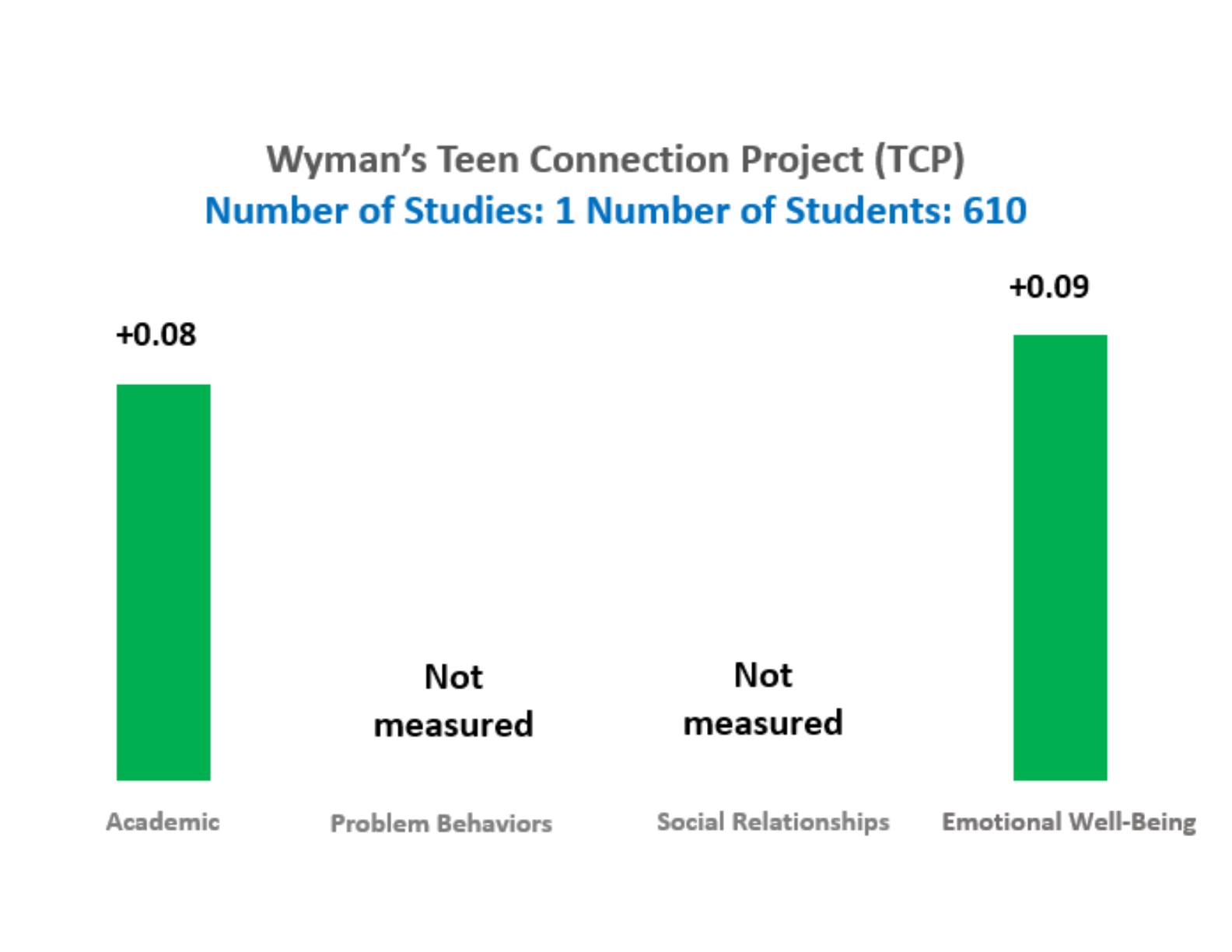
At the four-month follow-up, Connection Project students reported significantly greater use of social support to cope with stress (effect size = +0.08), had significantly lower depressive symptoms (effect size = +0.09), and reported significantly greater academic engagement (effect size = +0.08) than control students. These results qualify The Connection Project for a Strong rating in the Academic and Emotional Well-Being domains.
Staffing Requirements
It is required that TCP is facilitated only by adults who have completed Wyman’s Training of Facilitators. Two facilitators per TCP group are recommended.
Professional Development/Training
Successful completion of Wyman’s TCP Training of Facilitators is required prior to program implementation. Training is structured to include one hour of asynchronous virtual work, and one day (seven hours) of cohort-based learning. Trained facilitators also have ongoing access to TCP Communities of Practice and additional resources to support program quality. Each implementing organization may offer additional professional development and technical assistance opportunities.
Technology
There is no specific technology needed to implement the program. Access to computers and the internet is needed to collect teen surveys online and to complete the one hour asynchronous/virtual component of the Training of Facilitators.